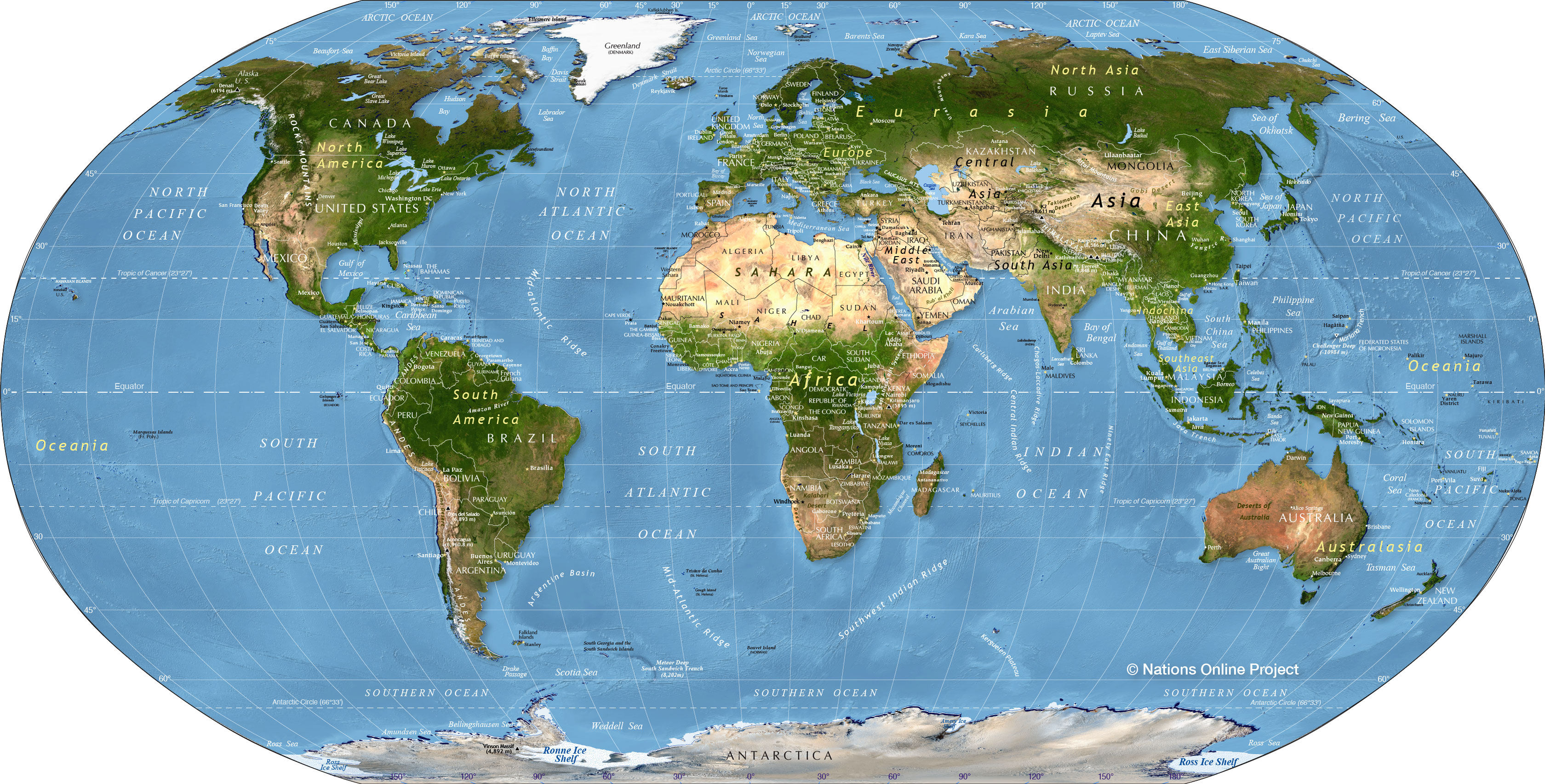
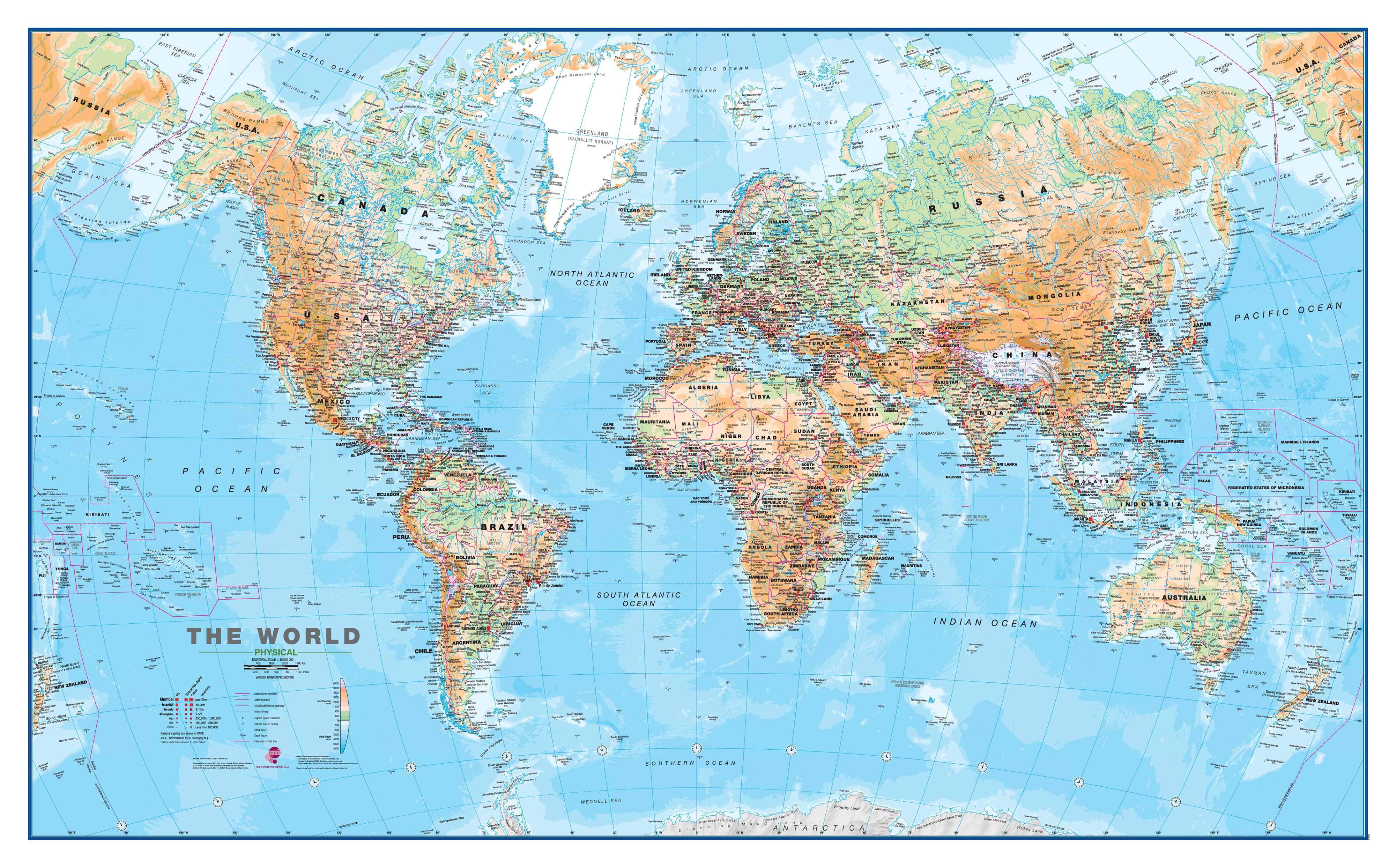
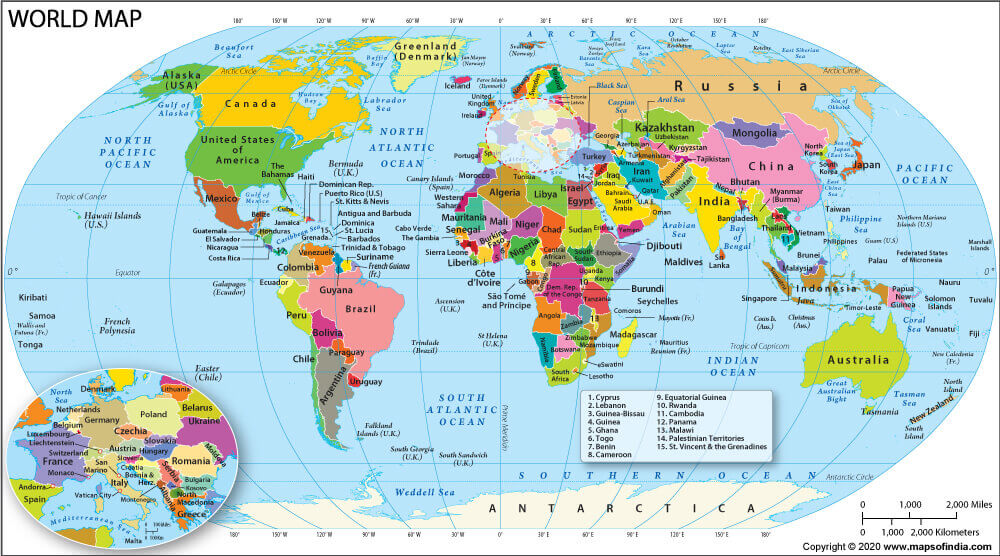
The world map, a seemingly simple depiction of our planet, holds within it a wealth of geographical information. One of the most striking features of any world map is the vast expanse of the Pacific Ocean. Covering approximately one-third of the Earth’s surface, the Pacific is not just the largest and deepest of Earth’s oceanic divisions, it’s a dominating force that shapes global climate, influences geopolitical strategies, and harbors a staggering diversity of marine life. Understanding its geographical layout, its bordering continents, and the island nations scattered across its surface is crucial to comprehending the world we live in.
A Geographical Giant: Extent and Dimensions
The Pacific Ocean sprawls between Asia and Australia to the west and North and South America to the east. Its northern boundary melts into the Arctic Ocean via the Bering Strait, while its southern extent is often defined by the Southern Ocean, though the precise demarcation remains a point of ongoing debate among oceanographers.
To grasp its sheer size, consider these facts:
- Area: Approximately 165.25 million square kilometers (63.8 million square miles). This is larger than all the landmasses of the world combined.
- Average Depth: Around 4,280 meters (14,040 feet).
- Deepest Point: The Challenger Deep in the Mariana Trench, reaching a staggering depth of approximately 10,929 meters (35,853 feet). This abyss is deeper than Mount Everest is tall.
The immense size of the Pacific explains its significant influence on global weather patterns. Its waters act as a massive heat reservoir, absorbing and releasing energy that drives atmospheric circulation and influences precipitation patterns worldwide.
Continental Embrace: Bordering Lands
The Pacific Ocean is bordered by a diverse range of continents and countries, each with its own unique relationship to this vast body of water:
- Asia: The eastern coastline of Asia, from Russia in the north to Indonesia in the south, forms a long western border for the Pacific. Countries like Japan, China, the Philippines, Vietnam, and South Korea are heavily reliant on the Pacific for trade, fishing, and resource extraction. The proximity to the Ring of Fire also makes these countries vulnerable to earthquakes and tsunamis originating in the Pacific.
- Australia: Located in the southwest Pacific, Australia’s eastern coastline stretches along the Coral Sea, a vibrant ecosystem known for its coral reefs and marine biodiversity. Australia’s economic prosperity and national identity are inextricably linked to the Pacific Ocean.
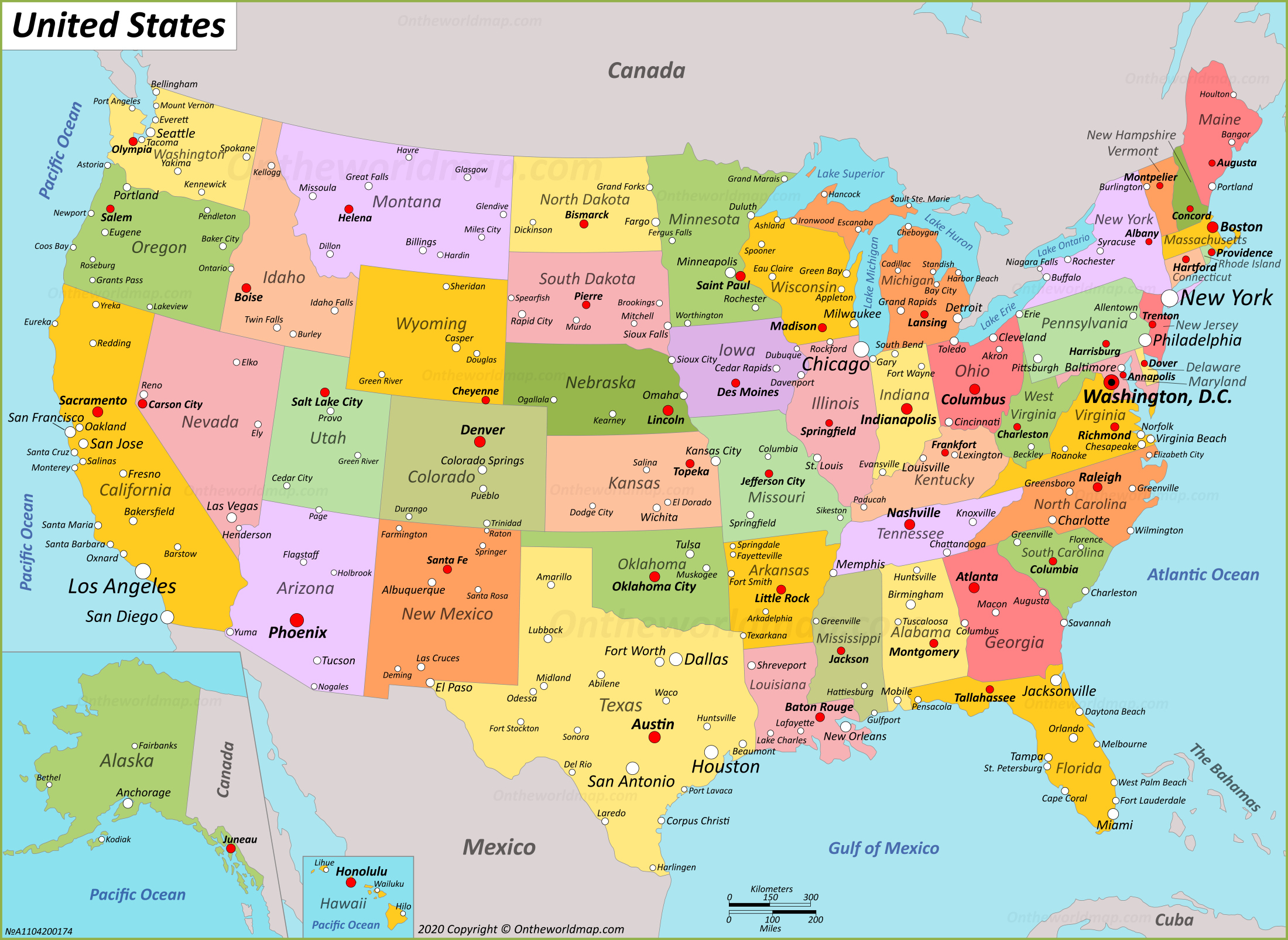
- North America: The western coast of North America, encompassing Canada, the United States, and Mexico, forms the eastern boundary of the northern Pacific. The Pacific Northwest, in particular, boasts a thriving maritime industry and a rich history of fishing and whaling.
- South America: The western coastline of South America, including Chile, Peru, Ecuador, and Colombia, faces the eastern Pacific. The Humboldt Current, a cold-water current flowing northward along the South American coast, supports a rich fishing industry and influences the climate of the region.
A Tapestry of Islands: Oceania and the Pacific’s Scattered Jewels
Perhaps the most iconic feature of the Pacific Ocean, as depicted on a world map, is the multitude of islands scattered across its vast expanse. These islands, collectively known as Oceania, are divided into three main groups:
- Micronesia: Located north of the equator and west of the International Date Line, Micronesia comprises hundreds of small islands, including the Federated States of Micronesia, Palau, the Marshall Islands, and Nauru. These islands are often low-lying atolls, making them particularly vulnerable to rising sea levels and climate change.
- Melanesia: Situated south of the equator and west of Polynesia, Melanesia includes larger islands such as Papua New Guinea, Fiji, Vanuatu, and the Solomon Islands. These islands are characterized by diverse cultures and a rich biodiversity.
- Polynesia: The largest and most geographically dispersed group, Polynesia stretches from Hawaii in the north to New Zealand in the south and Easter Island in the east. This triangle encompasses islands like Samoa, Tonga, Tahiti, and the Cook Islands, each with its own distinct Polynesian culture.
These island nations face unique challenges, including limited resources, vulnerability to natural disasters, and the existential threat of climate change. Yet, they also possess a rich cultural heritage and a deep connection to the ocean.
The Ring of Fire: A Tectonic Hotspot
A crucial aspect of understanding the Pacific Ocean’s geography is the "Ring of Fire," a major area in the basin of the Pacific Ocean where a large number of earthquakes and volcanic eruptions occur. This ring is associated with a nearly continuous series of oceanic trenches, volcanic arcs, and volcanic belts and plate movements. The intense seismic activity in this region is a consequence of the subduction of oceanic plates beneath continental plates.
The Ring of Fire has a profound impact on the countries bordering the Pacific, making them prone to earthquakes, tsunamis, and volcanic eruptions. Japan, Indonesia, Chile, and the west coast of the United States are all located within this zone of high geological activity.
Economic and Strategic Significance
The Pacific Ocean holds immense economic and strategic significance in the 21st century. Its vast fisheries provide a vital source of food for billions of people. Shipping lanes crisscross the Pacific, facilitating global trade and connecting major economies. The ocean floor holds valuable mineral resources, including oil, gas, and manganese nodules.
Furthermore, the Pacific Ocean has become a focal point of geopolitical competition. The United States, China, Japan, and other countries are vying for influence in the region, particularly in the South China Sea, where territorial disputes and competing claims over maritime resources have created tensions.
Environmental Concerns: A Sea Under Threat
Despite its vastness, the Pacific Ocean is facing numerous environmental threats:
- Plastic Pollution: The Great Pacific Garbage Patch, a massive accumulation of plastic debris in the North Pacific, is a stark reminder of the devastating impact of plastic pollution on marine ecosystems.
- Overfishing: Unsustainable fishing practices have led to the depletion of fish stocks and the disruption of marine food webs.
- Climate Change: Rising sea levels, ocean acidification, and changes in ocean currents are threatening coastal communities and marine ecosystems.
- Coral Bleaching: Warmer ocean temperatures are causing coral bleaching, which can lead to the death of coral reefs and the loss of biodiversity.
Addressing these environmental challenges requires international cooperation and a commitment to sustainable practices. Protecting the health of the Pacific Ocean is essential for the well-being of both the environment and the global economy.
Conclusion: A World Map Perspective
Looking at the world map, the Pacific Ocean dominates the scene, a vast and powerful presence that shapes the lives of billions. Its sheer size, its bordering continents, its scattered islands, and its geological activity all contribute to its unique character. Understanding the geography of the Pacific Ocean is essential for comprehending global climate patterns, geopolitical dynamics, and the environmental challenges facing our planet. As we navigate the complexities of the 21st century, a deeper understanding of this magnificent ocean is crucial for ensuring a sustainable and prosperous future for all. The map is just the starting point; the true depth of the Pacific lies in its intricate connection to our world.