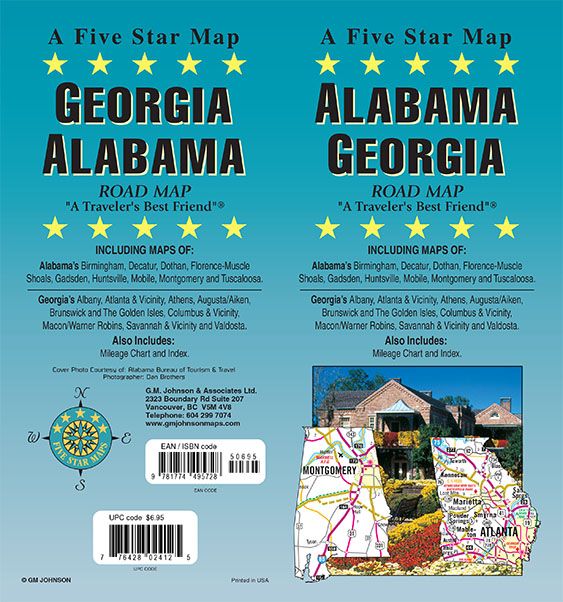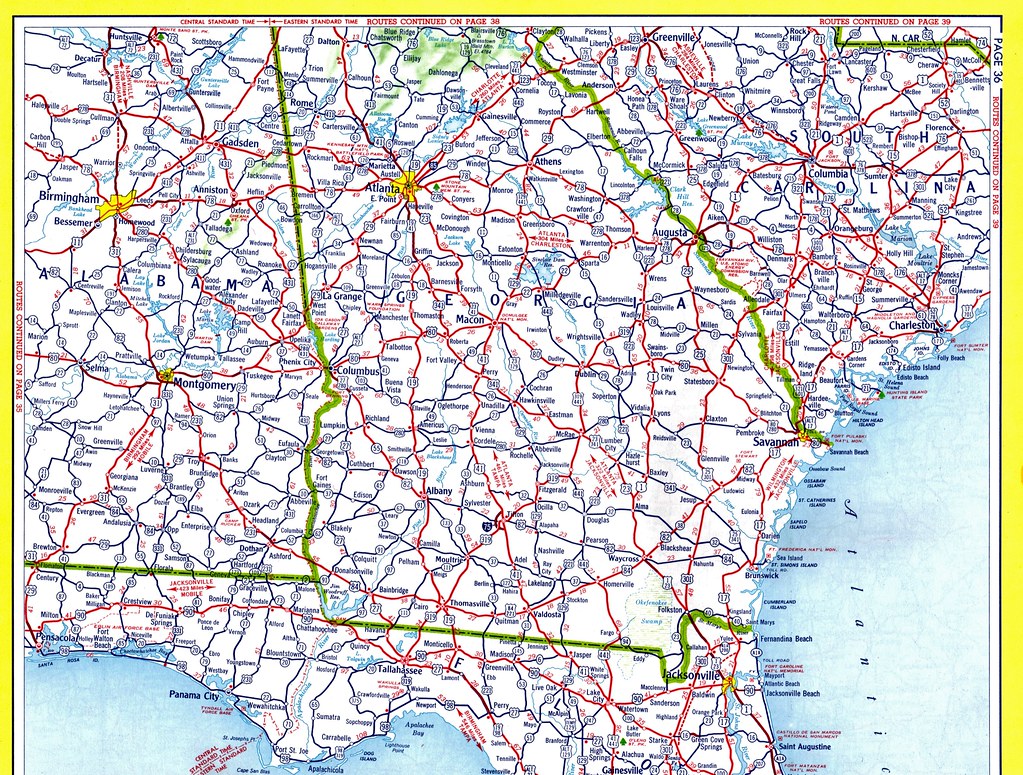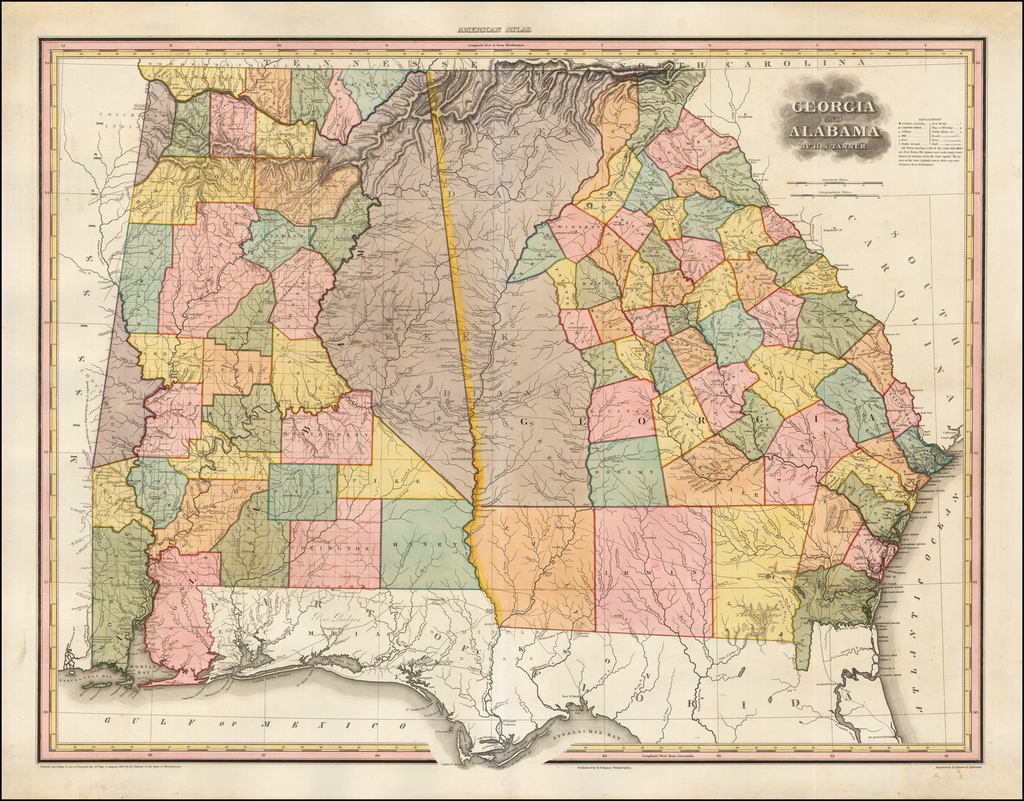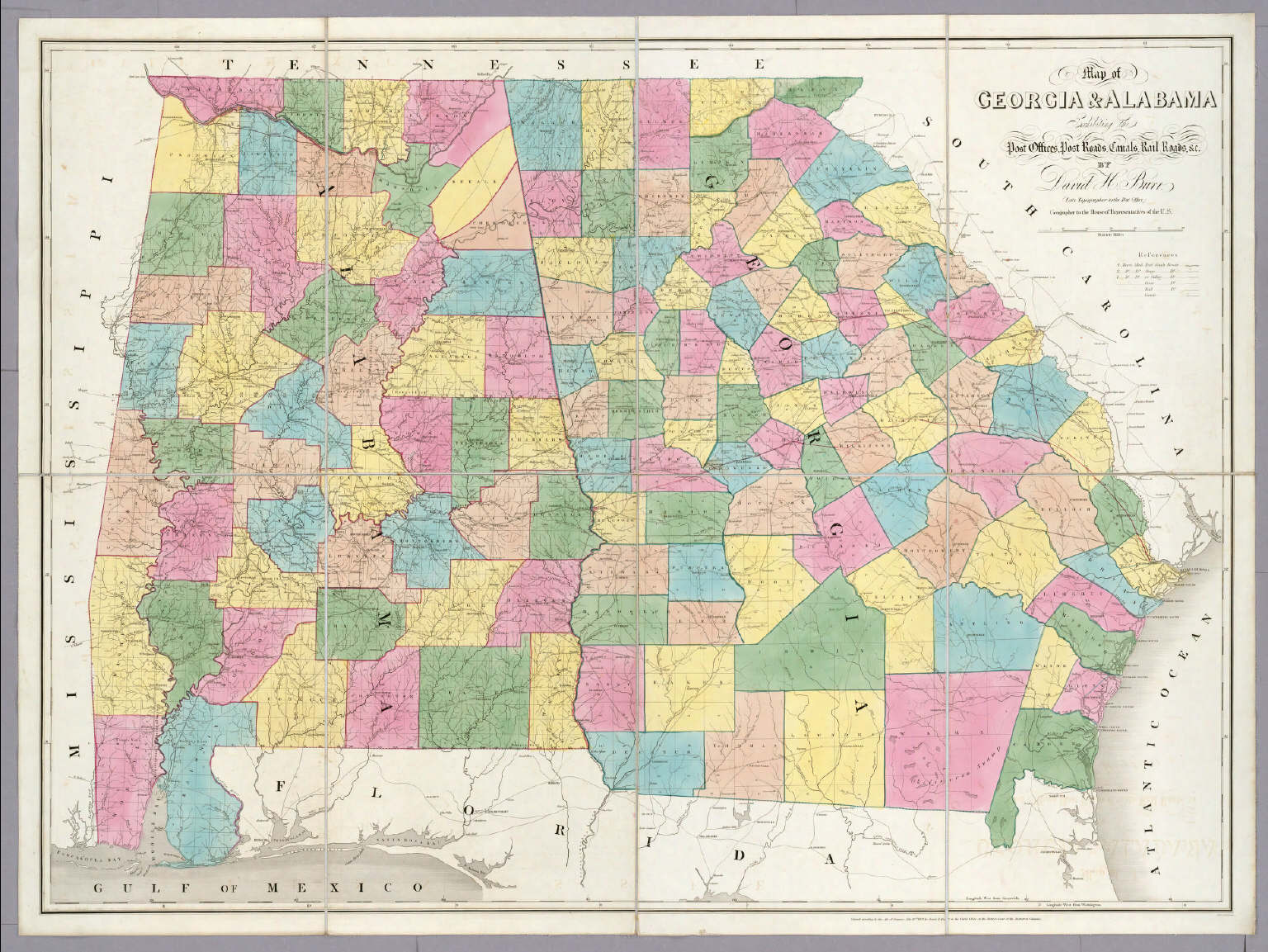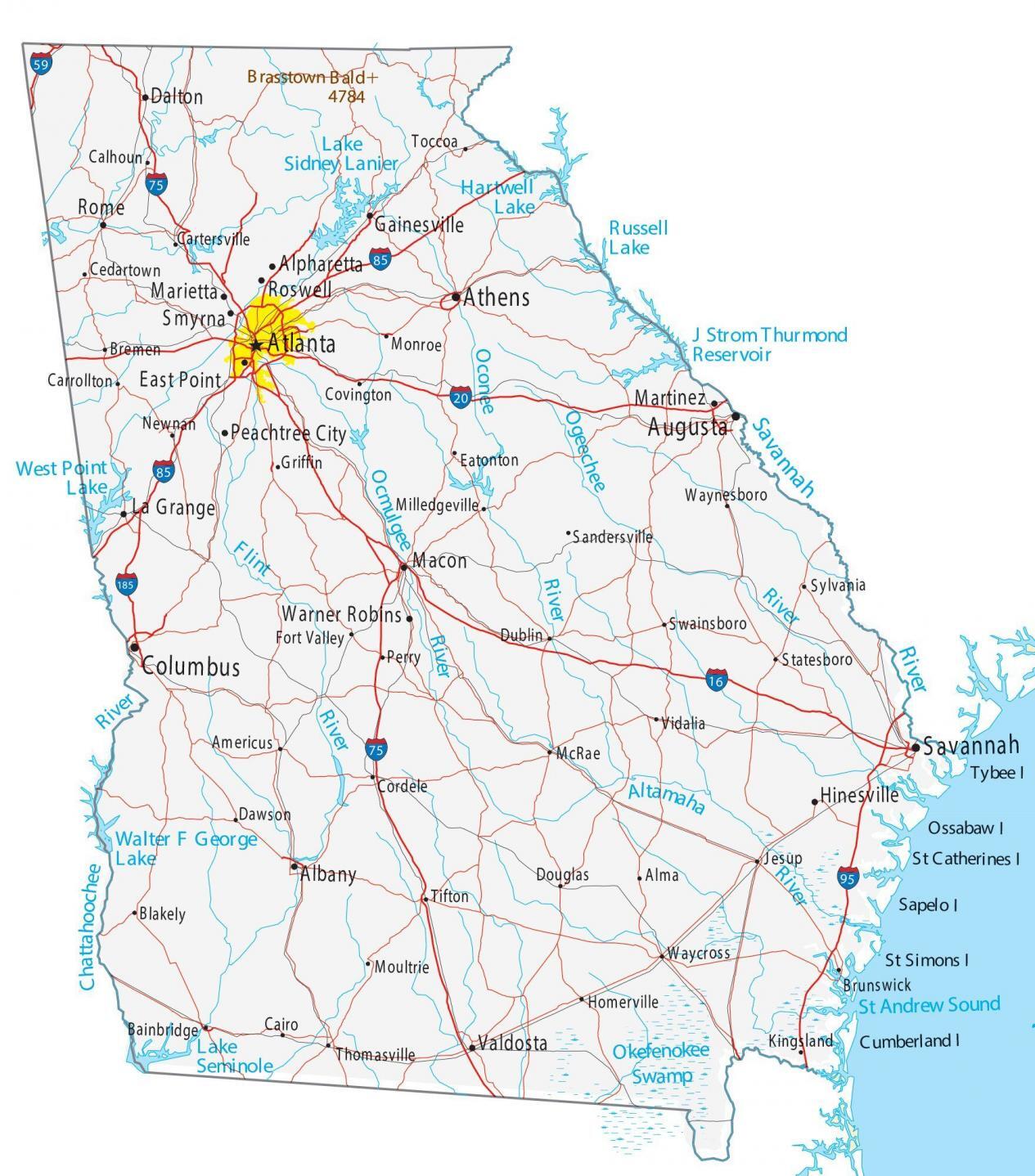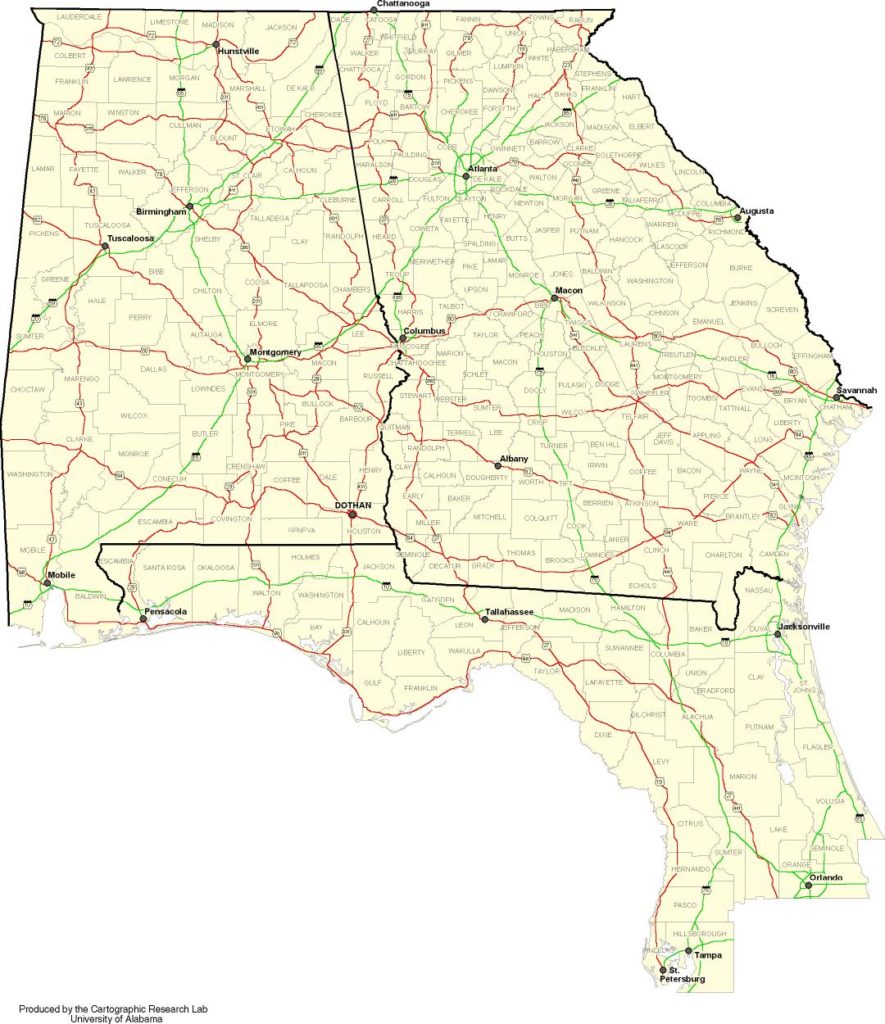
The states of Georgia and Alabama, nestled side-by-side in the heart of the American South, share more than just a border. They are linked by history, geography, culture, and a complex relationship that continues to evolve. Examining a map of Georgia and Alabama offers a fascinating glimpse into the forces that have shaped these two states and their enduring connection to the land.
A Physical Landscape of Contrasts and Connections:
A physical map of Georgia and Alabama immediately reveals a diverse tapestry of landscapes. Both states boast sections of the Appalachian Mountains, particularly in their northern regions. The rugged terrain, dotted with forests and crisscrossed by rivers, has historically served as a natural barrier, influencing settlement patterns and transportation routes.
In Georgia, the Blue Ridge Mountains dominate the northeast, culminating in Brasstown Bald, the state’s highest point. These mountains gradually transition into the Piedmont region, a rolling plateau characterized by fertile soil and a warmer climate. Similarly, northern Alabama is defined by the Cumberland Plateau, a section of the larger Appalachian Plateau, which features dramatic canyons and scenic overlooks.
Moving southward, the landscape flattens into the Coastal Plain, a broad expanse stretching from the Atlantic Ocean across Georgia and into Alabama, eventually merging with the Gulf Coastal Plain. This region is characterized by flat, sandy terrain, extensive wetlands, and a network of rivers that drain into the Atlantic Ocean and the Gulf of Mexico. The Fall Line, a geological boundary marking the transition between the Piedmont and the Coastal Plain, is a significant feature in both states. This line is often marked by rapids and waterfalls, providing opportunities for hydropower and influencing the location of early settlements and industrial centers.
The Chattahoochee River, a prominent feature on any map of Georgia and Alabama, serves as a vital artery, forming a significant portion of their shared border. This river has played a crucial role in transportation, agriculture, and power generation for both states, but it has also been a source of contention, particularly concerning water rights. The Apalachicola-Chattahoochee-Flint (ACF) River Basin, shared by Georgia, Alabama, and Florida, has been the subject of decades-long disputes over water allocation, highlighting the interconnectedness of these states and the challenges of managing shared natural resources.
A Historical Tapestry Unveiled Through Maps:
Overlaying a historical map onto the physical landscape reveals the profound impact of geography on the development of Georgia and Alabama. Early European exploration and settlement followed the natural pathways offered by rivers and coastal access. Spanish explorers ventured into the region in the 16th century, but it was the British who ultimately established a lasting presence.
Georgia, founded in 1732 as a buffer colony against Spanish Florida, initially encompassed a much larger territory than its present-day boundaries. Maps from this period illustrate the strategic importance of the colony in protecting British interests in the Southeast. As settlement expanded, roads and trading routes gradually carved their way across the landscape, connecting coastal ports like Savannah and Brunswick with inland communities.
Alabama’s history is intertwined with that of Georgia, particularly during the period of westward expansion. The land that now constitutes Alabama was originally part of the Mississippi Territory, carved out of land ceded by Georgia. Maps from the early 19th century depict the rapid growth of settlements in Alabama, fueled by the cotton boom and the displacement of Native American tribes.
The Trail of Tears, a tragic chapter in American history, is starkly illustrated on maps showing the forced removal of Cherokee, Creek, Choctaw, Chickasaw, and Seminole nations from their ancestral lands in Georgia and Alabama to territories west of the Mississippi River. These maps highlight the scale of the displacement and the devastating impact on Native American communities.
The Civil War left an indelible mark on both states. Maps of the era show the strategic importance of Georgia and Alabama to the Confederacy. Atlanta, a major railroad hub and industrial center, became a prime target for Union forces, as evidenced by maps detailing the Atlanta Campaign. Alabama, with its port city of Mobile and its role as a supplier of agricultural goods, also played a vital role in the Confederate war effort.
Modern Maps and Contemporary Challenges:
Modern maps of Georgia and Alabama reflect the significant transformations that have occurred since the Civil War. Population density maps reveal a concentration of people in metropolitan areas like Atlanta, Birmingham, and Mobile. Transportation maps showcase the extensive network of highways, railroads, and airports that connect these urban centers and facilitate the movement of goods and people.
Economic maps highlight the diverse industries that drive the economies of Georgia and Alabama. Georgia boasts a thriving technology sector, a robust film industry, and a strong presence in logistics and transportation. Alabama’s economy is rooted in manufacturing, particularly in the automotive and aerospace industries, as well as agriculture and tourism.
However, maps also reveal contemporary challenges facing both states. Poverty maps illustrate the persistent disparities in income and access to resources, particularly in rural areas. Environmental maps highlight the impact of urbanization, agriculture, and industrial activity on the region’s natural resources, including water quality and air pollution.
The ongoing debate over water rights in the ACF River Basin continues to be reflected in maps highlighting the shared water resources of Georgia, Alabama, and Florida. The need for sustainable water management and collaborative solutions is increasingly urgent in the face of population growth and climate change.
Cultural and Political Landscapes:
Beyond the physical and economic landscapes, maps can also offer insights into the cultural and political landscapes of Georgia and Alabama. Voting maps, for example, can reveal patterns of political affiliation and the influence of demographics on election outcomes. Cultural maps can highlight the distribution of different cultural groups, religious institutions, and historical sites.
The legacy of the Civil Rights Movement is deeply embedded in the landscape of both states, and maps can help to visualize the locations of significant events and landmarks. The Edmund Pettus Bridge in Selma, Alabama, a site of the "Bloody Sunday" march, stands as a powerful symbol of the struggle for voting rights. The Martin Luther King Jr. National Historical Park in Atlanta commemorates the life and work of the civil rights leader.
Conclusion:
Examining a map of Georgia and Alabama is more than just a geographical exercise; it’s a journey through history, culture, and the complex interplay of human activity and the natural environment. From the rugged mountains of the north to the flat coastal plains of the south, the landscape has shaped the development of these two states in profound ways. The shared border, the common rivers, and the intertwined histories of Georgia and Alabama create a unique regional identity.
By studying maps of Georgia and Alabama, we can gain a deeper understanding of the challenges and opportunities facing these states in the 21st century. From managing shared water resources to addressing economic disparities and preserving cultural heritage, the maps serve as a reminder of the interconnectedness of these two states and the importance of collaboration in shaping their future. They are not just static representations of space, but dynamic narratives that tell the story of the American South.