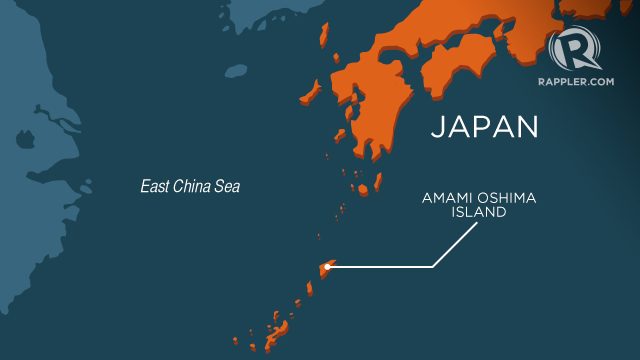
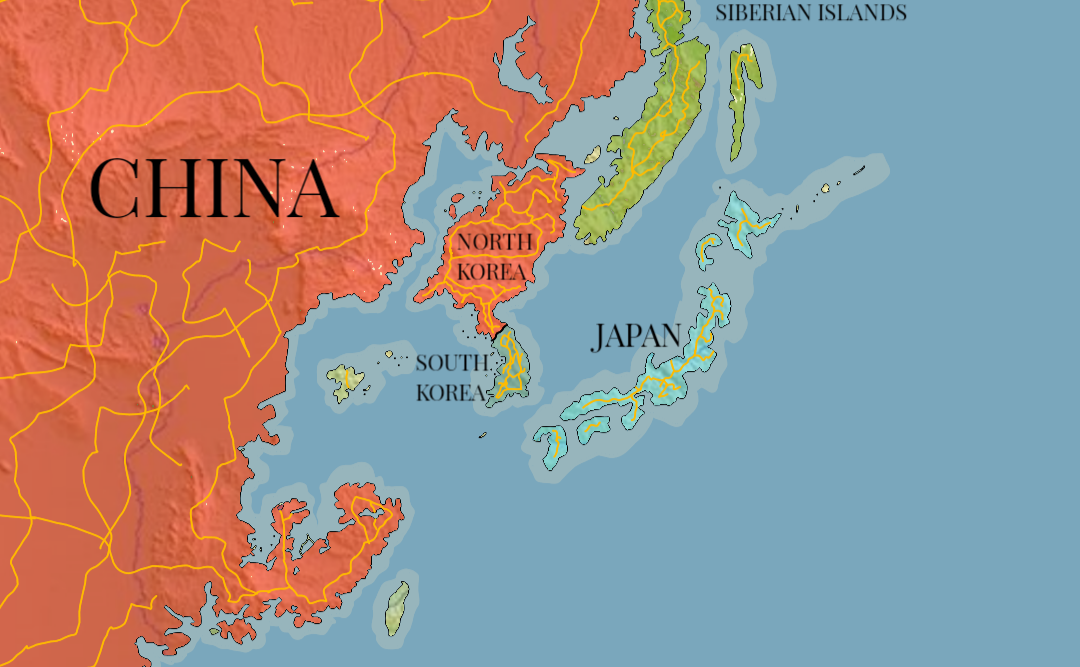
The East China Sea (ECS), a marginal sea bordering China, Japan, South Korea, and Taiwan, is much more than just a body of water. Its map, a seemingly simple depiction of coastlines, islands, and depths, is in reality a complex and highly contested document. Understanding the East China Sea map, its features, and the historical and political narratives that shape its interpretation is crucial to comprehending the ongoing tensions and potential flashpoints in this vital region.
The Geographical Landscape: A Detailed Look at the East China Sea Map
The East China Sea extends approximately 1,249,000 square kilometers, connecting to the Yellow Sea in the north and the South China Sea in the south. Its geographical features are diverse and play a significant role in the surrounding nations’ economies and strategic calculations. A closer look at the map reveals the following key elements:
-
Coastlines and Maritime Borders: The ECS is bordered by the mainland coast of China to the west, the Korean Peninsula to the north, the Japanese archipelago to the east, and Taiwan to the south. The intricate coastlines of these countries define their respective maritime borders, which are often subject to overlapping claims and disputes. The map highlights the importance of these borders in delineating fishing zones, resource exploration areas, and military patrol routes.
-
Continental Shelf: The East China Sea is characterized by a vast and shallow continental shelf, particularly along the Chinese coast. This shelf is known to be rich in oil and natural gas reserves, contributing significantly to the territorial disputes. The map illustrates the extent of this shelf and how it overlaps with the Exclusive Economic Zones (EEZs) claimed by China, Japan, and South Korea.
-
Islands and Archipelagos: The ECS is dotted with numerous islands, both large and small, which hold immense strategic and symbolic value. The most prominent and contentious are the Senkaku/Diaoyu Islands, a group of uninhabited islands controlled by Japan but claimed by China and Taiwan. The map highlights the location of these islands and their proximity to the continental shelf, further fueling the territorial dispute. Other significant islands include the Ryukyu Islands (including Okinawa), part of Japan, and Jeju Island, belonging to South Korea.
-
Sea Lanes and Shipping Routes: The East China Sea is a vital artery for global trade. Major shipping lanes crisscross the sea, connecting Northeast Asian economies with the rest of the world. The map clearly illustrates these crucial shipping routes, underscoring the importance of maintaining freedom of navigation and maritime security in the region. Disruptions to these sea lanes due to conflict or piracy could have significant global economic consequences.
-
Water Depths and Ocean Currents: The map also reveals information about water depths and ocean currents. This data is crucial for navigation, fishing, and understanding the marine environment. The Kuroshio Current, a warm ocean current flowing northward along the Japanese coast, influences the climate and marine ecosystems of the ECS.
Historical Claims and Territorial Disputes: Shaping the Cartography
The East China Sea map is not just a neutral representation of geography; it is deeply intertwined with historical narratives and competing territorial claims. These claims, often rooted in historical interpretations and nationalistic sentiments, contribute to the complexity and sensitivity of the region.
-
The Senkaku/Diaoyu Islands Dispute: The most prominent dispute revolves around the Senkaku/Diaoyu Islands. Japan claims sovereignty based on its incorporation of the islands in 1895, arguing that they were terra nullius (land belonging to no one) at the time. China, on the other hand, argues that it has historical precedence dating back centuries, citing ancient maps and historical records. Taiwan also claims the islands as part of its territory. The dispute intensifies whenever government vessels or civilian activists from either side approach the islands, leading to heightened tensions and diplomatic protests. The map serves as a focal point for these competing claims, with each nation presenting maps that support their respective positions.
-
Exclusive Economic Zones (EEZs) and Continental Shelf Delimitation: The United Nations Convention on the Law of the Sea (UNCLOS) grants coastal states the right to establish EEZs extending 200 nautical miles from their baselines. However, overlapping EEZ claims arise when countries are located less than 400 nautical miles apart. This is the case in the East China Sea, where China, Japan, and South Korea all have overlapping EEZ claims. Furthermore, China asserts rights to the natural resources on its continental shelf, which extends beyond the 200 nautical mile limit in some areas. These overlapping claims are depicted on the map, highlighting the potential for conflict over resource exploration and exploitation.
-
Historical Grievances and Nationalistic Sentiments: The territorial disputes in the East China Sea are often intertwined with historical grievances and nationalistic sentiments. China, in particular, views the Senkaku/Diaoyu Islands issue as part of its broader struggle against historical injustices perpetrated by Japan during the 20th century. These historical narratives contribute to the emotional intensity of the disputes and make it more difficult to find mutually acceptable solutions.
Geopolitical Implications and Regional Security
The East China Sea map is a critical tool for understanding the geopolitical landscape of the region and the potential risks to regional security. The disputes over maritime boundaries and island sovereignty have significant implications for:
-
Military Posturing and Naval Power Projection: The East China Sea has become a theater for increased military activity, with China, Japan, and the United States conducting naval exercises and deploying military assets in the region. China’s growing naval power and its assertive stance in the ECS have raised concerns among neighboring countries and the United States, which is committed to maintaining freedom of navigation and regional stability. The map becomes a crucial element in strategic planning and military deployments.
-
Resource Competition and Energy Security: The potential for oil and natural gas exploration in the East China Sea is a major driver of the territorial disputes. Access to these resources is vital for the energy security of China, Japan, and South Korea. The map illustrates the location of potential resource deposits and the overlapping claims to these areas, highlighting the economic stakes involved in the disputes.
-
International Law and Dispute Resolution: The East China Sea disputes raise important questions about the interpretation and application of international law, particularly UNCLOS. Efforts to resolve the disputes through negotiation and arbitration have been hampered by the complexity of the issues and the unwillingness of some parties to compromise. The map serves as a visual aid in understanding the legal arguments and the potential impact of different interpretations of international law.
-
Regional Stability and Diplomatic Relations: The ongoing disputes in the East China Sea have strained diplomatic relations between China, Japan, and South Korea. The disputes also have the potential to escalate into military conflict, with potentially devastating consequences for the region and the world. The map serves as a constant reminder of the potential for conflict and the need for diplomatic engagement and peaceful resolution of disputes.
Conclusion: Navigating a Complex Landscape
The East China Sea map is much more than just a geographical representation; it is a reflection of historical claims, territorial disputes, and geopolitical ambitions. Understanding the map, its features, and the narratives that shape its interpretation is essential for navigating the complex and often turbulent waters of the East China Sea. Finding peaceful and mutually acceptable solutions to the ongoing disputes is crucial for maintaining regional stability, promoting economic cooperation, and preventing the escalation of conflict in this vital region. Future efforts should focus on fostering dialogue, promoting transparency, and adhering to international law to ensure a peaceful and prosperous future for the East China Sea.