The promise of lightning-fast speeds, low latency, and a revolution in connectivity has made 5G the buzzword of the decade. As mobile carriers aggressively roll out their next-generation networks, understanding the current state of 5G coverage across the United States is crucial for consumers, businesses, and policymakers alike. This article delves into the intricacies of 5G coverage maps, exploring their importance, limitations, and how to effectively utilize them to make informed decisions about your connectivity needs.
The Allure of 5G: Beyond Faster Downloads
Before diving into the specifics of coverage maps, it’s important to appreciate the transformative potential of 5G technology. While faster download speeds are the most commonly cited benefit, 5G offers much more:
- Enhanced Mobile Broadband (eMBB): Enables seamless streaming of high-definition video, immersive virtual and augmented reality experiences, and lag-free online gaming.
- Ultra-Reliable Low Latency Communications (URLLC): Supports mission-critical applications requiring near-instantaneous responsiveness, such as autonomous vehicles, remote surgery, and industrial automation.
- Massive Machine Type Communications (mMTC): Facilitates the connection of billions of devices, powering the Internet of Things (IoT) and enabling smart cities, precision agriculture, and connected healthcare.
This potential has fueled significant investment in 5G infrastructure across the country. However, the reality of 5G deployment is far from uniform, and coverage varies significantly depending on location, carrier, and the specific type of 5G technology being deployed.
Deciphering the 5G Coverage Map Puzzle: A Multi-Layered Approach
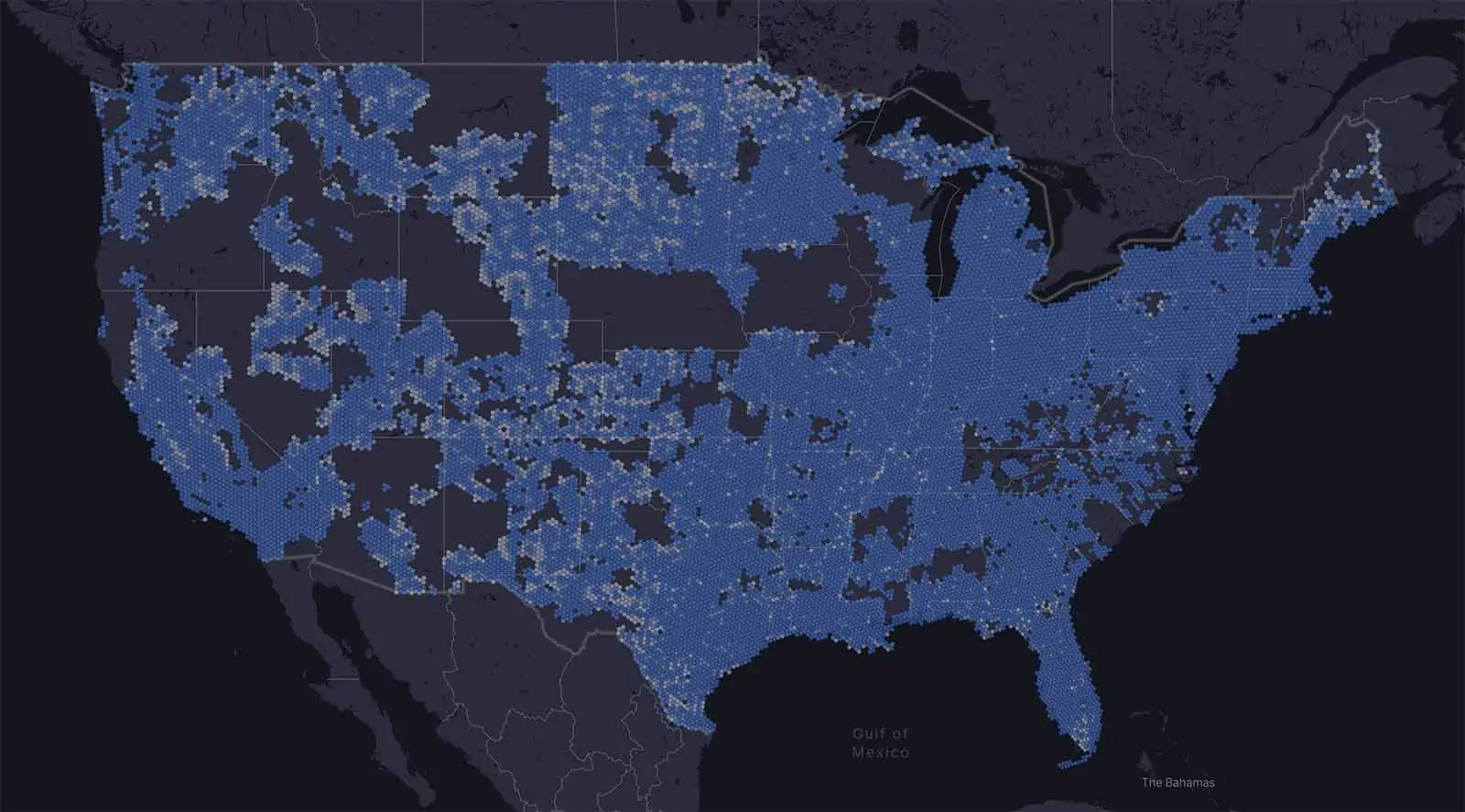
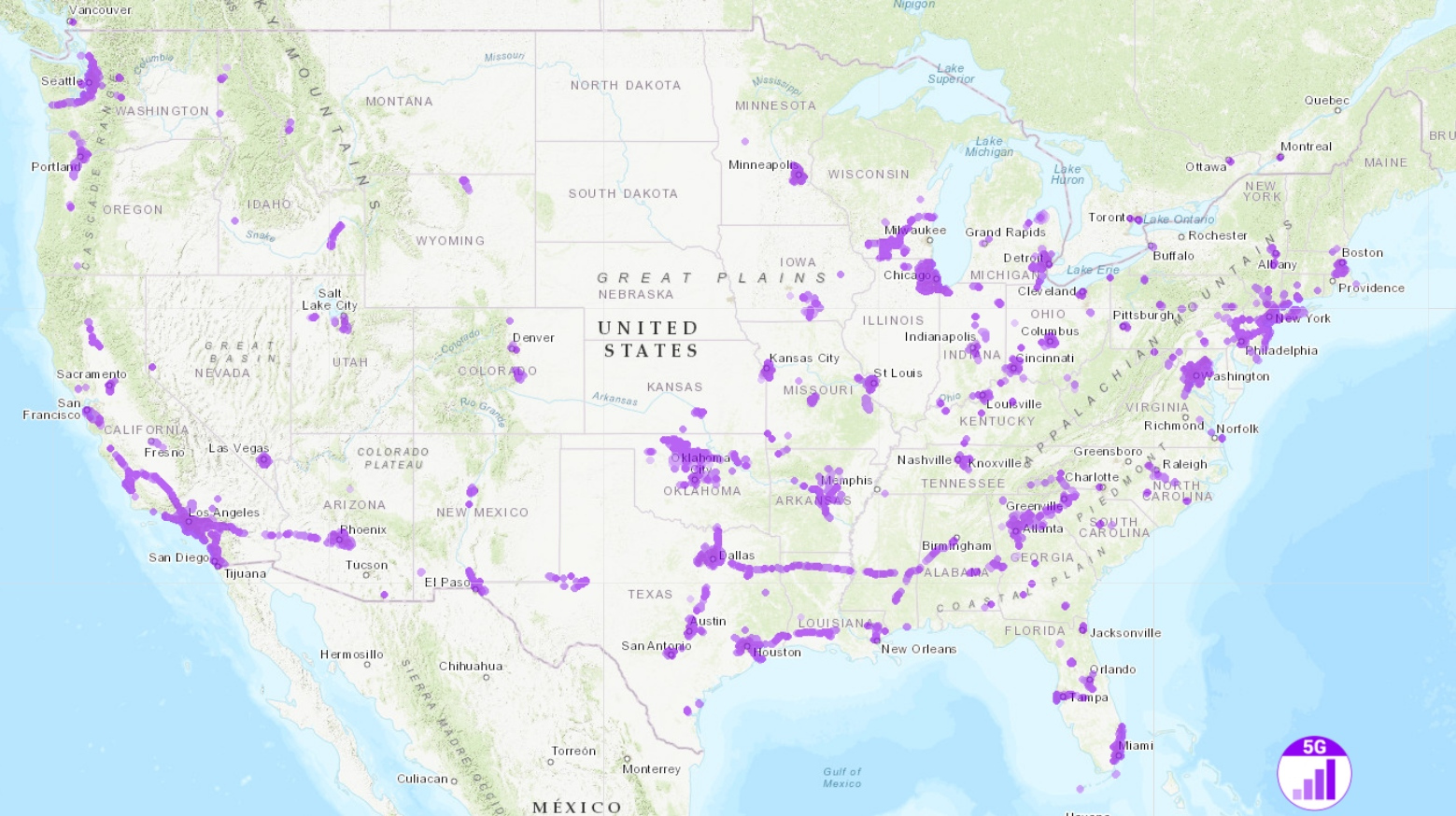
5G coverage maps are visual representations of where 5G service is available. They are typically provided by mobile carriers like Verizon, AT&T, T-Mobile, and US Cellular, and are accessible through their websites or mobile apps. However, understanding these maps requires a nuanced approach, considering several key factors:
1. Frequency Bands and Their Impact on Coverage:
5G operates on a range of frequency bands, each with its own characteristics that impact coverage and performance:
- Low-Band (e.g., 600MHz, 850MHz): These frequencies offer excellent coverage, penetrating buildings and traveling long distances. However, they typically provide speeds that are only modestly faster than 4G LTE. Think of this as the foundational layer of 5G coverage.
- Mid-Band (e.g., 2.5GHz, 3.7GHz): This is considered the "sweet spot" for 5G, offering a balance of speed and coverage. It provides significantly faster speeds than low-band while still maintaining reasonable penetration.
- High-Band (mmWave): This operates on extremely high frequencies (e.g., 24GHz and above) and delivers the fastest speeds imaginable – often exceeding 1 Gbps. However, mmWave signals have very limited range and are easily blocked by buildings, trees, and even weather conditions. mmWave is primarily deployed in dense urban areas and is best suited for stationary or very localized use cases.
Therefore, a coverage map that simply states "5G" without specifying the frequency band can be misleading. It’s essential to understand which type of 5G is available in a particular area to accurately gauge the expected performance.
2. Carrier-Specific Deployments and Strategies:
Each carrier has adopted its own unique strategy for deploying 5G, resulting in significant differences in coverage and performance across the country.
- Verizon: Initially focused heavily on mmWave deployment in dense urban areas, offering blazing-fast speeds but limited coverage. They have since expanded their low-band and mid-band coverage to provide a more balanced offering.
- AT&T: Initially focused on a "5G Evolution" approach, which involved upgrading existing 4G LTE infrastructure. They have since deployed a broader range of 5G technologies, including low-band, mid-band, and mmWave.
- T-Mobile: Has focused on deploying 5G using its extensive mid-band spectrum, acquired through its merger with Sprint. This has allowed them to achieve a relatively wide coverage footprint with competitive speeds.
- US Cellular: Primarily focuses on providing 5G coverage in rural and underserved areas, often utilizing low-band and mid-band frequencies.
Understanding the specific deployment strategies of each carrier is crucial for interpreting their respective coverage maps and choosing the provider that best meets your needs.
3. Limitations of Coverage Maps: Real-World Performance vs. Theoretical Availability
While coverage maps provide a valuable overview of 5G availability, they have inherent limitations that should be considered:
- Theoretical vs. Actual Coverage: Coverage maps often depict the theoretical coverage based on network planning models. Actual coverage can vary significantly due to factors such as terrain, building materials, foliage, and network congestion.
- Indoor Coverage Challenges: 5G signals, especially mmWave, can struggle to penetrate buildings. Coverage maps typically do not accurately reflect indoor coverage, which can be significantly weaker than outdoor coverage.
- Dynamic Network Conditions: Network conditions are constantly changing, influenced by factors such as the number of users connected to a cell tower, the type of data being transmitted, and even the weather. Coverage maps are static representations and cannot reflect these dynamic variations.
- Handset Compatibility: Not all 5G devices are created equal. Some devices may only support certain 5G frequency bands or lack the necessary antennas to achieve optimal performance.
Therefore, it’s crucial to view coverage maps as a general guideline rather than a definitive guarantee of 5G availability and performance.
4. Utilizing Coverage Maps Effectively: A Practical Guide
Despite their limitations, 5G coverage maps can be valuable tools for making informed decisions about your connectivity needs. Here’s how to use them effectively:
- Compare Coverage Maps from Multiple Carriers: Don’t rely solely on the coverage map of a single carrier. Compare maps from different providers to get a more comprehensive picture of 5G availability in your area.
- Pay Attention to Frequency Bands: Look for information about the specific frequency bands being used in your area. Mid-band offers the best balance of speed and coverage, while mmWave is primarily suitable for dense urban environments.
- Read the Fine Print: Most carriers provide disclaimers and caveats on their coverage maps. Pay attention to these details to understand the limitations of the map and the factors that can affect actual coverage.
- Consider Real-World Reviews and User Feedback: Supplement coverage map information with real-world reviews and user feedback from online forums and social media. This can provide valuable insights into actual 5G performance in specific areas.
- Take Advantage of Trial Periods: Many carriers offer trial periods or money-back guarantees. Take advantage of these opportunities to test 5G service in your area before committing to a long-term contract.
- Use Third-Party Coverage Tracking Apps and Websites: Websites like CellMapper and apps like OpenSignal rely on crowdsourced data to provide a more granular and up-to-date view of cellular coverage. These resources can be helpful for identifying areas with strong or weak 5G signals.
- Understand Your Usage Patterns: Consider how you primarily use your mobile data. If you spend most of your time indoors, focusing on carriers with strong low-band coverage may be more beneficial. If you frequently travel to dense urban areas, mmWave coverage may be a priority.
Beyond Coverage Maps: The Future of 5G Connectivity in the USA
The rollout of 5G is an ongoing process, and coverage is constantly evolving. As carriers continue to invest in infrastructure and deploy new technologies, 5G availability will continue to expand and improve. Looking ahead, several key trends will shape the future of 5G connectivity in the USA:
- Continued Expansion of Mid-Band Coverage: Mid-band spectrum is becoming increasingly important for delivering a compelling 5G experience. Carriers are actively deploying mid-band infrastructure to expand their coverage footprint and improve speeds.
- Integration of 5G with Fixed Wireless Access (FWA): 5G FWA is emerging as a viable alternative to traditional wired broadband, particularly in rural and underserved areas. This technology uses 5G signals to deliver high-speed internet to homes and businesses.
- Development of Private 5G Networks: Private 5G networks are being deployed by businesses and organizations to support specific use cases, such as industrial automation, smart manufacturing, and enhanced security.
- Advancements in 5G Technology: New 5G technologies, such as carrier aggregation and beamforming, are constantly being developed to improve network performance and efficiency.
Conclusion: Navigating the 5G Revolution with Informed Decisions
The 5G revolution is transforming the way we connect and communicate. Understanding the nuances of 5G coverage maps is essential for navigating this complex landscape and making informed decisions about your connectivity needs. By considering factors such as frequency bands, carrier-specific deployments, and the limitations of coverage maps, you can choose the provider and plan that best suits your individual requirements. As 5G technology continues to evolve and expand, staying informed about the latest developments will be crucial for unlocking the full potential of this transformative technology. While coverage maps are a valuable tool, remember to supplement them with real-world experiences, user feedback, and a clear understanding of your own data usage patterns to make the most informed choices.